

To protect a boat from the destructive effects of UV exposure, oxidation, and water damage, comprehensive boat detailing should be performed at least two to three times per year, with a professional ceramic coating or high-grade sealant applied annually. Gelcoat is highly porous, meaning that continuous exposure to intense sunlight, high humidity, and mineral-heavy waters will rapidly degrade the hull’s surface without a strict, recurring maintenance schedule. Establishing this seasonal detailing routine ensures that a vessel maintains its structural integrity, aesthetic brilliance, and long-term resale value.
Understanding Marine Environmental Threats
Unlike automotive paint, highly porous fiberglass gelcoat is susceptible to microscopic pitting that traps contaminants. Left unprotected, two primary threats will systematically destroy a boat’s exterior:
- UV Exposure and Radiation: Ultraviolet rays break down chemical bonds within the gelcoat, causing colors to fade and white hulls to turn yellow. Without a sacrificial barrier of high-quality sealant or ceramic coating, solar radiation accelerates this molecular degradation, leaving a dull, chalky appearance.
- Oxidation: Accelerated by heat and moisture, oxidation occurs when oxygen molecules interact with unprotected gelcoat. This reaction creates a rough, porous texture that locks in exhaust soot, dirt, and organic debris. Severe oxidation cannot be washed away; it requires heavy compounding and paint correction to restore the gloss.
Water Damage and Mineral Staining
Whether a vessel sits in fresh water or salt water, mineral deposits, algae, and organic scum lines pose a constant threat. When water evaporates off an unprotected hull, it leaves behind hard calcium and magnesium deposits. Over time, these minerals etch into the gelcoat, creating permanent water spots and weakening the barrier that prevents osmotic blistering (water penetrating the gelcoat structure).
The Optimal Maintenance Schedule
Maintaining a marine vessel requires a proactive strategy rather than a reactive one. Waiting until the hull looks chalky or faded means that damage has already occurred beneath the surface. A professional-grade schedule divides care into weekly, seasonal, and annual phases.
1. Weekly to Bi-Weekly: The Clean-Down
Every time a boat returns from the water, it needs a thorough freshwater rinse and wash using a pH-neutral marine shampoo. This prevents surface contaminants from bonding with the gelcoat. During a recent field assessment for a client in Fort Worth, our team noted that boats receiving a simple freshwater spray-down without mechanical agitation still retained a microscopic layer of destructive mineral film. A quick wipe-down with a UV-inhibiting spray detailer during this phase extends the life of your baseline protection.
2. Quarterly (Every 3 to 4 Months): The Seasonal Detail
Every three to four months, a boat requires a deep-cleaning wash, mild clay-bar decontamination to remove embedded minerals, and a fresh application of a high-grade marine sealant or wax. This cadence is particularly vital for boat owners who frequent regional inland lakes, where intense regional heat accelerates the breakdown of traditional waxes. When scheduling premium boat detailing in Keller, choosing a team that understands these regional climate stressors is critical for preserving your topcoat.
3. Annually (Every 12 Months): The Restoration and Ultimate Protection
Once a year, the boat should undergo a comprehensive mechanical inspection and detailing process. This includes multi-stage machine compounding and polishing to remove any minor oxidation or swirl marks, followed by the installation of long-term protection, such as an advanced ceramic coating. Securing professional Keller boat detailing solutions once a year prevents the deep-set yellowing common to vessels stored outdoors in the North Texas climate.
Advanced Marine Protection Protocols
Standard methods often fail against the extreme friction and environmental abuse that watercraft experience. True preservation requires specialized, multi-stage chemical engineering over traditional waxes.
- Advanced Protection Techniques & Industry-Leading Technology: True preservation begins with deep decontamination to lift iron and acid stains out of porous gelcoat, followed by precision paint correction to restore a mirror reflection. Utilizing industry-leading technology like Ceramic Pro marine coatings establishes a permanent covalent bond with the fiberglass. This creates an ultra-hydrophobic, high-barrier shield that repels scum lines and blocks UV radiation using these advanced protection techniques.
- Customized Solutions: A saltwater fishing boat faces entirely different environmental stressors than a freshwater wakeboard boat stored on a lift. Because cookie-cutter methods fail, engineering customized solutions tailored to your vessel’s storage, water salinity, and usage patterns ensures targeted maintenance for high-wear areas like the transom and swim platform.
Interior Marine Detailing: Protecting Crucial Surfaces
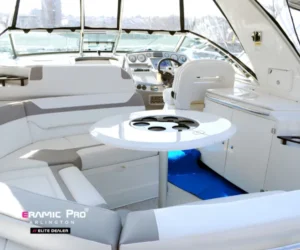
While the hull faces the brunt of water friction, the boat’s interior is subjected to a brutal combination of pooling water, sunscreen oils, sweat, and unrelenting overhead sunlight. Interior detailing must be executed with the same frequency as exterior care to avoid costly upholstery replacements.
- Marine Vinyl Care: Boat vinyl features a top protective coat that can be easily stripped by harsh household cleaners. Professional detailing utilizes specialized, pH-balanced vinyl cleansers followed by deep-conditioning UV blocks to prevent the material from cracking, drying, and splitting along the stitched seams.
- Non-Skid Decking: The textured surfaces on boat decks are notorious for trapping dirt, fish blood, and lake sediment. Cleaning these zones requires specialized non-skid cleaners and medium-stiff nylon brushes that lift stains without flattening the molded grip texture.
- Isinglass and Acrylic Enclosures: Clear plastic curtains can cloud or yellow rapidly under solar strain. Specialized anti-static plastic polishes are required to maintain optical clarity and prevent micro-scratching.
Elevating the Client Experience through Craftsmanship
Entrusting an asset like a marine vessel to a service provider requires absolute confidence in their technical capability and operational philosophy. The difference between standard cleaning services and an elite marine spa lies in the guiding principles of the business.
- A Commitment to Customer Education: We maintain a strict commitment to customer education, providing transparent insights into how gelcoat behaves. When owners understand the chemical processes behind oxidation, they can better manage daily post-lake routines to maximize their financial investment.
- Fostering Trust and Confidence: Built entirely on accountability, our results-driven process utilizes meticulous multi-point intake inspections and flawless execution. This approach is dedicated to fostering a sense of trust and confidence in services, giving clients complete peace of mind that certified professionals are handling their watercraft.
- Unparalleled Service and Protection: By pairing rigorous quality control with continuous technician training, every curve of the hull and inch of upholstery is treated with precision. Our ultimate goal is to deliver unparalleled service and protection that shields your investment from the elements and keeps it looking immaculate.
People Also Ask
How do I know if my boat needs to be polished or compounded? If your boat’s hull has a dull, chalky appearance, or if a clean microfiber towel catches slightly when dragged across the surface, it has oxidized. If the oxidation is light and the surface still has some gloss, a machine polish will suffice. If the surface is completely matte and leaves a white residue on your hand, it requires a heavy compounding stage to cut away the dead gelcoat before polishing.
Can I use automotive wax or wash products on my boat? No, automotive products are not formulated for marine environments. Automotive washes are often not strong enough to cut through marine scum lines, while automotive waxes lack the high-temperature melting points and robust UV inhibitors required to protect porous gelcoat under intense solar radiation and water friction.
What is the benefit of a ceramic coating over traditional marine wax? Traditional marine wax lasts approximately two to three months before it breaks down under the sun and water friction. A specialized marine ceramic coating creates a hard, hydrophobic, covalent bond with the gelcoat that lasts for years. It provides significantly higher UV protection, resists chemical etching, prevents stains from bonding, and makes cleaning the boat after a day on the water incredibly easy.
Secure Ultimate Protection for Your Vessel
Preserving the elegance, performance, and financial value of your boat demands an authoritative approach to surface care. At Ceramic Pro Arlington, we deliver a premium, clean, and highly professional experience that reflects our deep passion for vehicle and marine perfection. As a certified Ceramic Pro Elite Dealer, our highly trained technicians are dedicated to mastering their craft and utilizing industry-leading technology to safeguard your investment.
Whether you are navigating local waterways or preparing your vessel for extended storage, our tailored solutions provide the unmatched protection your watercraft deserves. We invite boat owners across the region to experience the reassurance and pride that comes with elite craftsmanship. Explore our full suite of advanced paint protection films, precision paint corrections, ceramic coatings, and specialized boat detailing in Keller, TX.
Contact us directly today to request a comprehensive quote or schedule an appointment, and let our team provide the flawless finish and peace of mind you deserve.
