

Professional marine detailing is superior to DIY methods because certified technicians utilize specialized rotary tools, heavy-cut wool pads, and commercial-grade oxidation restorers that penetrate porous gelcoat far beyond the capability of store-bought waxes. By correcting deep gelcoat degradation, severe chalking, and environmental contamination at a microscopic level, professional restoration preserves structural hull integrity, reduces hydrodynamic drag, and prevents costly long-term devaluation. Ultimately, expert care saves watercraft owners substantial time and expense by eliminating the high risk of permanent gelcoat burn, uneven compounding, and premature coating failure.
Understanding Marine Gelcoat and Why Watercraft Require Specialized Care
Caring for a boat differs fundamentally from maintaining a car because marine gelcoat is much thicker and far more porous than automotive clear coat. Over time, UV rays, water immersion, and pollutants break down this porous resin, turning it into a dull, chalky residue.
Automotive waxes and light polishes lack the chemical density needed to cut through dense gelcoat oxidation. Applying consumer-grade car products merely seals in contamination beneath a short-lived shine, causing the gelcoat to deteriorate further underneath.
| Feature | Marine Gelcoat | Automotive Clear Coat |
| Material Density | Highly Porous Resin | Non-Porous Polymer |
| Thickness | 15–25 Mils | 1.5–2.0 Mils |
| Oxidation Type | Deep Chalking | Surface Fading |
| Restoratory Tooling | High-Torque Rotary Polisher | Dual-Action Polish |
| Protective Layer Needed | Heavy Ceramic Coating | Synthetic Sealant |
The Limits of DIY Equipment and Over-the-Counter Products
The main barrier in DIY marine care is the gap in equipment and chemistry. Consumer orbital polishers lack the high torque, specialized wool pads, and heavy-cut compounds required to level dense, oxidized gelcoat. Applying excessive pressure or harsh retail compounds often causes pad swirls, holograms, or severe gelcoat burns that require costly fiberglass repairs.
Additionally, store-bought carnauba waxes rely on temporary fillers that wash away within weeks under intense heat and water friction, leaving the porous hull exposed to UV damage and mineral etching. Professional marine detailing replaces temporary waxes with heavy-duty compounding and durable ceramic protection.
Selecting professional marine detailing in Grapevine, TX ensures that your vessel is treated with commercial-grade surface correctors engineered to permanently eliminate oxidation rather than masking it under temporary silicone fillers.
Precision Oxidation Removal and Heavy-Cut Surface Restoration
Restoring a boat’s finish requires a systematic, multi-step process tailored to the precise condition of the hull. Professional technicians perform thorough surface decontamination before touching a polisher to the gelcoat. This includes chemical washdowns to strip salt deposits, scum lines, and environmental fallouts that accumulate during seasonal use.
- Heavy Oxidation Leveling: Using high-torque rotary polishers paired with twisted wool pads and heavy-cut marine compounds to level severe chalking and shallow scratches.
- Intermediate Polish: Transitioning to foam or wool-blend pads with medium-cut compounds to remove micro-marring and restore deep color depth.
- Finish Refining: Finishing with ultra-fine finishing polishes to eliminate holograms and leave a crystal-clear reflection.
Executing this process safely requires years of hands-on experience and a deep understanding of surface temperatures. High-speed rotary compounding generates substantial friction heat; without precise pad control and constant temperature monitoring, heat can scorch the underlying resin. Boat owners seeking expert Grapevine marine detailing rely on trained specialists who master thermal dynamics during compounding to achieve clarity without sacrificing gelcoat thickness.
Long-Term Defense Through Advanced Marine Protection
Once the gelcoat is fully corrected and restored, it must be sealed against future degradation. Traditional waxes melt at temperatures as low as 120°F (49°C) , a temperature boat surfaces routinely reach on hot summer days. Once the wax melts, UV rays instantly resume breaking down the underlying gelcoat structure.
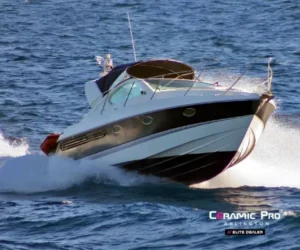
Professional marine detailers utilize advanced protection techniques that leverage chemical nanotechnology. Rather than sitting on top of the surface like a soft wax, professional-grade ceramic coatings chemically bond to the microscopic pores of the gelcoat. This forms a hard, permanent hydrophobic shield that reflects UV radiation, repels waterborne contaminants, and resists harsh salt crystallization.
By applying industry-leading technology like Ceramic Pro Marine coatings, certified installers create an impenetrable barrier that dramatically simplifies ongoing washdowns. Dried water spots, exhaust residue, and scum lines release effortlessly with mild soap and water, eliminating the need for harsh acid washes or constant recoating.
For vessel owners exploring high-end marine detailing in Grapevine, transitioning from traditional DIY waxes to permanent ceramic protection provides superior gloss, extreme durability, and unmatched resistance against environmental degradation.
Interior Preservation: Upholstery, Teak, and Marine Electronics
Marine detailing extends far beyond the exterior hull. A vessel’s interior cockpit, seating, non-skid flooring, and navigation systems endure extreme exposure to moisture, UV rays, bodily oils, and mildew spores. DIY interior cleaning frequently relies on aggressive household cleaners that strip essential plasticizers from marine-grade vinyl, causing premature cracking, seam splitting, and discoloration.
- Marine Vinyl Preservation: Deep cleaning vinyl seams with pH-neutral antimicrobial agents followed by UV-inhibiting conditioners that keep material supple without leaving slippery residues.
- Non-Skid Deck Restoration: Cleaning intricate non-skid textures using specialized brush patterns and high-extraction washing to remove ground-in dirt without dulling the protective topcoat.
- Teak Wood Care: Carefully cleaning and sealing natural teak wood to preserve rich grain patterns while preventing gray weathering and water rot.
- Marine Electronics Protection: Safely cleansing multi-function displays (MFDs) and gauge clusters with anti-static, non-abrasive screen restorers that prevent anti-glare coating degradation.
Through customized solutions, professional detailers tailor interior restoration strategies to match the exact material composition of your watercraft, ensuring every component remains protected against intense summer heat and damp storage conditions.
Evaluating the True Cost: DIY Investment vs. Professional Value
Many boat owners initially choose the DIY route under the assumption that it saves money. However, a comprehensive financial comparison reveals that professional detailing is often the more cost-effective long-term choice when accounting for equipment, materials, labor time, and asset value preservation.
| Factor | DIY Marine Maintenance | Professional Marine Detailing |
| Initial Equipment Cost | High (Rotary buffers, specialized pads, backing plates, safety gear) | None (All commercial equipment supplied) |
| Product Efficacy | Low to Moderate (Retail waxes, off-the-shelf compounds, short-lived sealants) | Professional Grade (Ceramic Pro marine coatings, heavy-cut marine compounds) |
| Time Required | 15–25 Hours per seasonal application | Zero personal labor (Completed by certified team) |
| Risk of Damage | High (Gelcoat burn, holograms, vinyl dry-rot, electronic screen damage) | Zero (Backed by insured, factory-trained technicians) |
| Protection Lifespan | 1–3 Months (Requires frequent reapplication) | Multi-Year (Backed by long-term manufacturer warranties) |
| Resale Value Impact | Moderate (Faded spots and holograms diminish buyer interest) | Maximum (Documented professional care preserves pristine market value) |
When factoring in the cost of purchasing professional-grade dual-action and rotary machines, multiple wool and foam pad sets, specialized compound stages, safety equipment, and weekends spent laboring under the sun, DIY detailing rapidly loses its perceived savings. Partnering with a dedicated specialist allows watercraft owners to spend their valuable downtime enjoying the open water rather than performing laborious physical maintenance.
People Also Ask
How often should a boat be professionally detailed?
A boat should be professionally detailed at least once or twice per year depending on usage, water type, and storage conditions. Boats kept in water or exposed to full sun benefit from bi-annual detailing to prevent heavy oxidation and gelcoat breakdown.
Can professional detailing remove heavy chalking from boat gelcoat?
Yes, professional marine detailers use heavy-cut compounds, specialized wool pads, and high-torque rotary polishers to wet-sand or compound away dead, chalky layers, revealing fresh, glossy gelcoat underneath.
Is ceramic coating better than traditional wax for boats?
Ceramic coating is vastly superior to traditional marine wax. While wax melts at high temperatures and lasts only a few weeks under UV exposure, ceramic coatings form a semi-permanent chemical bond with the gelcoat that lasts for years, providing superior UV resistance, extreme repellency, and effortless maintenance.
How long does a professional marine detailing service take?
Depending on the size of the watercraft and the severity of surface oxidation, a comprehensive professional marine detailing service typically takes between 1 to 3 days to complete thoroughly.
Why Choose Ceramic Pro Arlington for Your Watercraft
At Ceramic Pro Arlington, we view vehicle and watercraft care as both a science and an art form. As a designated Ceramic Pro Elite Dealer, our facility operates under high standards of precision, technical expertise, and continuous industry education. We provide unparalleled service and protection designed to preserve your investment for years to come.
Contact us today to discuss your watercraft’s needs, request a tailored consultation, and discover how our advanced marine preservation strategies keep your vessel looking pristine season after season.
