

Yes, marine detailing can, in most cases, restore an oxidized boat by removing the damaged outer layer of gelcoat and exposing a healthier surface underneath. While results vary based on severity, professional correction typically delivers a substantial improvement in gloss, color depth, and surface protection without the need for repainting.
What Is Oxidation on a Boat?
Oxidation is a chemical reaction that occurs when gelcoat is exposed to ultraviolet radiation, oxygen, and environmental contaminants over time. Unlike surface dirt, oxidation is a material-level degradation—it changes the structure of the gelcoat itself.
This is why a simple wash doesn’t fix the issue. The dull, chalky appearance comes from microscopic breakdown in the top layer of the surface.
Key Indicators of Oxidation
- Light oxidation: Slight dullness, reduced reflectivity
- Moderate oxidation: Noticeable fading, chalk residue transfers to your hand
- Heavy oxidation: Rough, porous texture with deep color loss
For boat owners researching marine detailing in Arlington, TX, correctly diagnosing the level of oxidation is the first step in determining whether a full restoration is achievable.
How Marine Detailing Restores an Oxidized Boat
Marine detailing is not a cosmetic shortcut; it’s a controlled correction process that physically removes the compromised gelcoat layer.
Process Breakdown
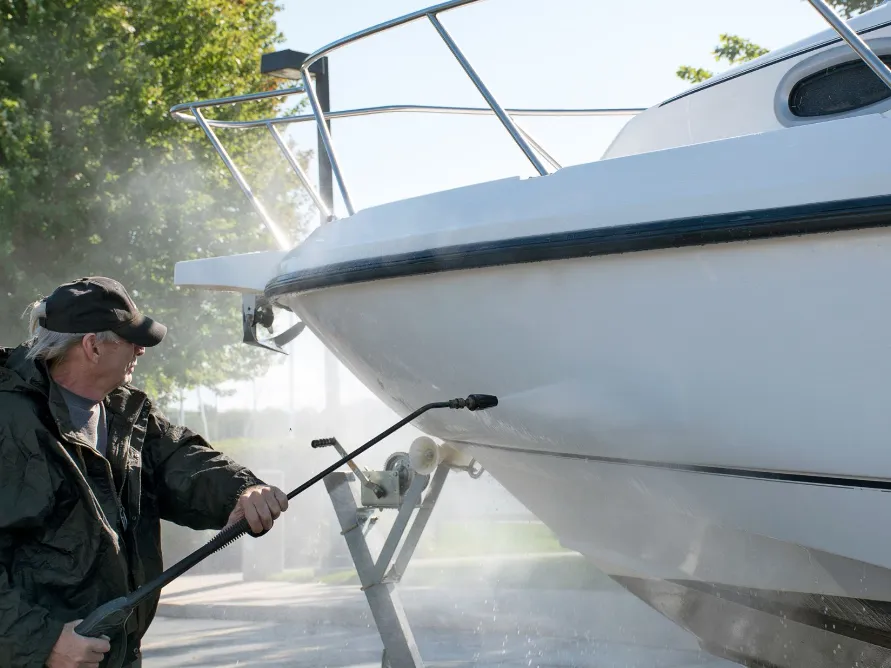
- Decontamination Wash
This step removes surface contaminants like salt, algae, and embedded debris. Skipping this stage risks grinding contaminants into the gelcoat during correction. - Compounding (Oxidation Removal)
Abrasive compounds are used with machine polishers to remove the oxidized layer. This is where most of the visual transformation occurs. - Polishing (Surface Refinement)
After compounding, polishing smooths out micro-abrasions and restores clarity, increasing light reflection and gloss. - Protection Application
The corrected surface is sealed with wax, sealant, or ceramic coating to prevent rapid re-oxidation.
Restoration Specifications
Compounding
: Abrasive leveling process that removes oxidized gelcoat
Polishing
: Refinement stage that enhances gloss and clarity
Sealant/Wax
: Short-term protective layer (months of durability)
Ceramic Coating
: Long-term protective layer with UV resistance (years of durability)
What Results Can You Expect?
The outcome of marine detailing depends on two primary variables: oxidation severity and gelcoat thickness.
Realistic Outcome Ranges
- Light oxidation
Nearly full restoration. Surface returns to a high-gloss finish with strong reflection. - Moderate oxidation
Significant improvement. Most dullness is removed, though some deeper imperfections may remain. - Heavy oxidation
Partial restoration. The surface improves visually, but uniformity may not be fully achievable.
Field Note: During a recent audit in the Viridian neighborhood of Arlington, TX, a mid-sized recreational boat with moderate oxidation underwent a two-stage correction. The process restored approximately 85% of the original gloss, with remaining defects traced to deeper gelcoat wear rather than surface oxidation.
This distinction matters; detailing can only correct what remains in the material.
Cost of Marine Detailing for Oxidation Removal
Marine detailing costs are primarily driven by labor intensity. Heavily oxidized surfaces require more time, effort, and polishing passes to restore.
Typical pricing varies by level of correction:
Single-stage correction involves light restoration work, while multi-stage correction is more intensive and used for deeper defects and oxidation.
Ceramic coating is an optional add-on that further increases overall cost, with pricing depending on vessel size and surface condition.
Cost Drivers Explained
Boat size
: Larger vessels increase working time and material usage
Oxidation severity
: Heavier oxidation requires multiple correction cycles
Surface condition
: Neglected boats often require additional prep work
Protection choice
: Ceramic coatings increase upfront cost but reduce long-term maintenance
When evaluating providers for marine detailing in Arlington, it’s important to confirm whether pricing includes true correction or just surface enhancement. Lower quotes often exclude multi-stage polishing.
How Long Does Restoration Last?
Restoration longevity depends on how well the corrected surface is protected and maintained afterward.
Protection Durability
- Wax: 3–6 months
- Sealant: 6–12 months
- Ceramic coating: 1–3+ years
Common Misconception: “Oxidation Means You Need to Repaint”
This assumption leads many boat owners to overspend unnecessarily.
The Technical Reality
Oxidation typically affects only the outermost microns of gelcoat. By removing that degraded layer, detailing restores the underlying material.
When Repainting Is Actually Required
- Gelcoat has worn through entirely
- Structural cracking or delamination is present
- Surface has been repeatedly over-corrected in the past
Most boats evaluated through Arlington, TX marine detailing fall well within the range of correction, making repainting avoidable in most cases.
When Marine Detailing Has Limitations
While effective, detailing is not a universal solution.
Situations With Reduced Outcomes
- Deep chemical staining
- Severe etching below the surface layer
- Previous sanding damage that compromised uniform thickness
In these scenarios, detailing still improves appearance but may not achieve a fully restored finish.
Why Professional Marine Detailing Matters
This process involves controlled material removal. Errors are not easily reversible.
Common DIY Failures
- Uneven compounding leading to patchy gloss
- Swirl marks from improper polishing technique
- Excessive abrasion resulting in gelcoat burn-through
Professional technicians use calibrated tools, marine-specific compounds, and systematic correction methods to avoid these issues.
How to Maintain Results After Restoration
Once oxidation is removed, maintenance determines how long the finish holds.
Maintenance Best Practices
- Wash regularly with pH-neutral marine soap
- Dry using clean microfiber towels
- Avoid abrasive brushes or harsh chemicals
- Apply maintenance sprays or coating toppers
- Store under cover or use protective covers when possible
Maintenance Specifications
pH-neutral soap
: Preserves protective coatings without degradation
Microfiber drying
: Minimizes surface scratching
UV protectant
: Slows oxidation reformation
For those investing in Arlington marine detailing, maintenance is not optional; it directly affects how often corrections are needed in the future.
Is Marine Detailing Worth It?
From a financial and functional perspective, detailing offers a strong return on investment.
Cost Comparison
- Professional detailing: Hundreds to a few thousand dollars
- Full repainting: Tens of thousands of dollars
Beyond cost, detailing preserves original gelcoat, which is often preferable to repainting in terms of durability and resale value.
Conclusion: What You Should Expect
Marine detailing is a corrective, material-level process, not a temporary cosmetic fix. It removes oxidation, restores gloss, and extends the life of your boat’s gelcoat when performed correctly.
The key variables are oxidation depth, technician skill, and post-service protection. Addressing oxidation early increases the likelihood of near-complete restoration and reduces long-term costs. Providers such as Ceramic Pro Arlington focus on structured correction processes where early intervention plays a critical role in maximizing finish recovery and durability.
Take the Next Step
If your boat is showing signs of fading or chalking, now is the time to act.
Contact us today for a professional evaluation and a clear, data-driven correction plan. You’ll get a realistic assessment of what can be restored, and how to protect it for the long term.
People Also Ask
Can oxidation be completely removed from a boat?
Yes, if oxidation is light to moderate. Severe cases may only be partially corrected.
How long does marine detailing take?
Typically between 1–3 days, depending on boat size and oxidation level.
Does ceramic coating prevent oxidation?
It significantly slows oxidation by blocking UV exposure and environmental damage.
How often should a boat be detailed?
Correction is usually needed annually or less, depending on maintenance.
Is wet sanding required for oxidation removal?
Only in severe cases. Most oxidation can be addressed through compounding and polishing.
